Overview
Breaking barriers through wearable technology
Uni.Verse is a product design project exploring how wearable technology can dissolve language barriers in everyday human connection. The earpiece detects spoken language in real time and translates it seamlessly for the wearer, making conversations across languages feel natural, not mechanical.
The project involved the full product design process: concept development, character design to ground the product in human stories, physical product iteration, storyboarding, sketching, and animated video production.
Setting
Grounding the product in a human context
The design scenario centres on two people from different linguistic backgrounds who meet and want to connect. Without a shared language, conversation is impossible, but with Uni.Verse, the earpiece handles the translation invisibly, letting the people focus on each other rather than on the mechanics of communication.
The setting informed the product's core design principles: discretion, clarity, and speed. The earpiece had to feel like an extension of the wearer, not a device drawing attention to the language gap.
Design Question
How might we design a wearable that makes real-time translation feel invisible — so people can focus on connecting, not on the technology between them?
Character Design
Amalie & Malik
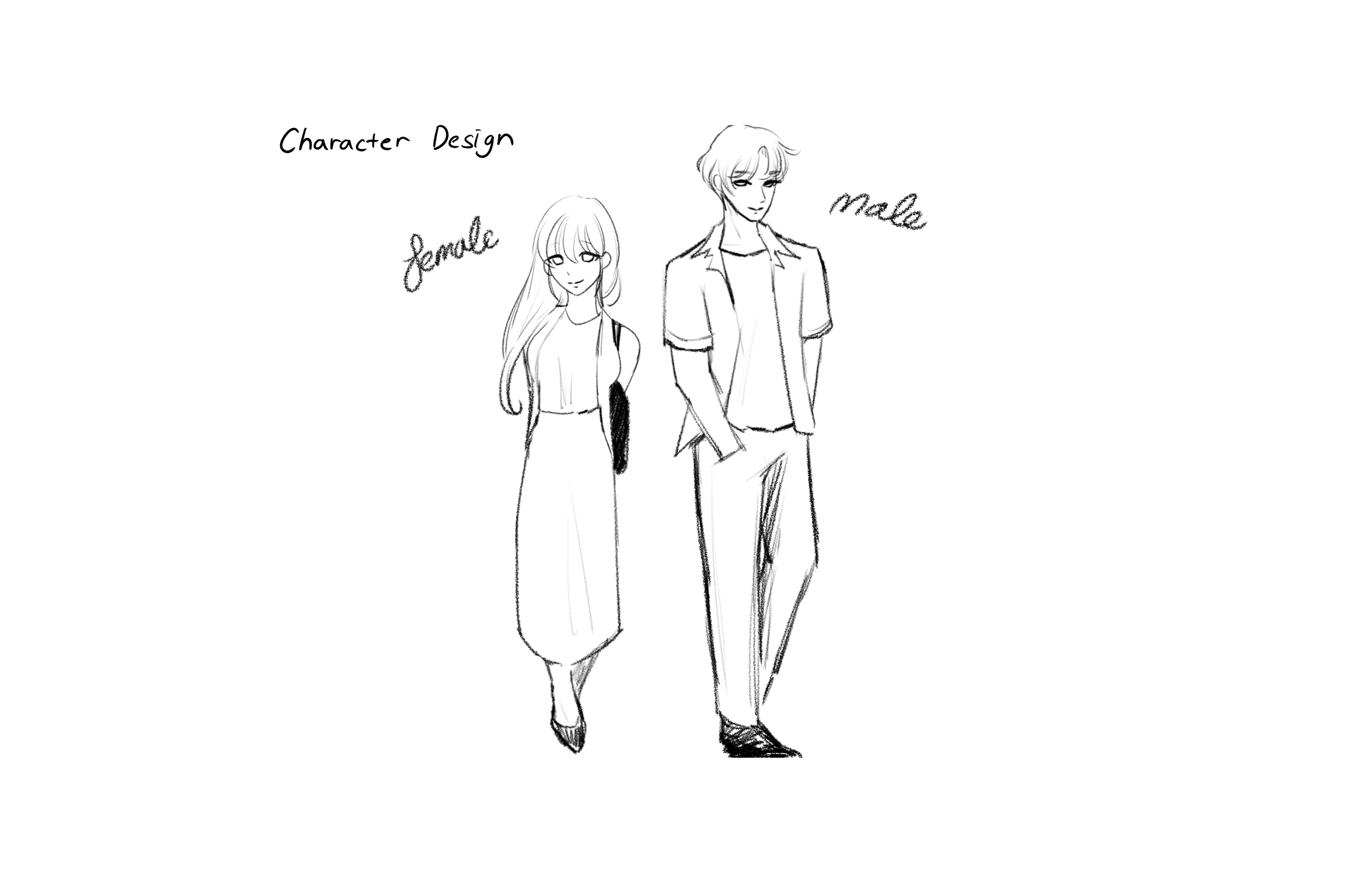
Two characters were developed to anchor the product narrative, Amalie and Malik. Designing them first helped define who Uni.Verse is for: people who want genuine human connection across languages, not just utility.
The character work informed the product's visual tone — approachable, soft, and human, rather than cold or overly technical. Their story drives the storyboard and animation that brings Uni.Verse to life.
Product Design
Designing the earpiece
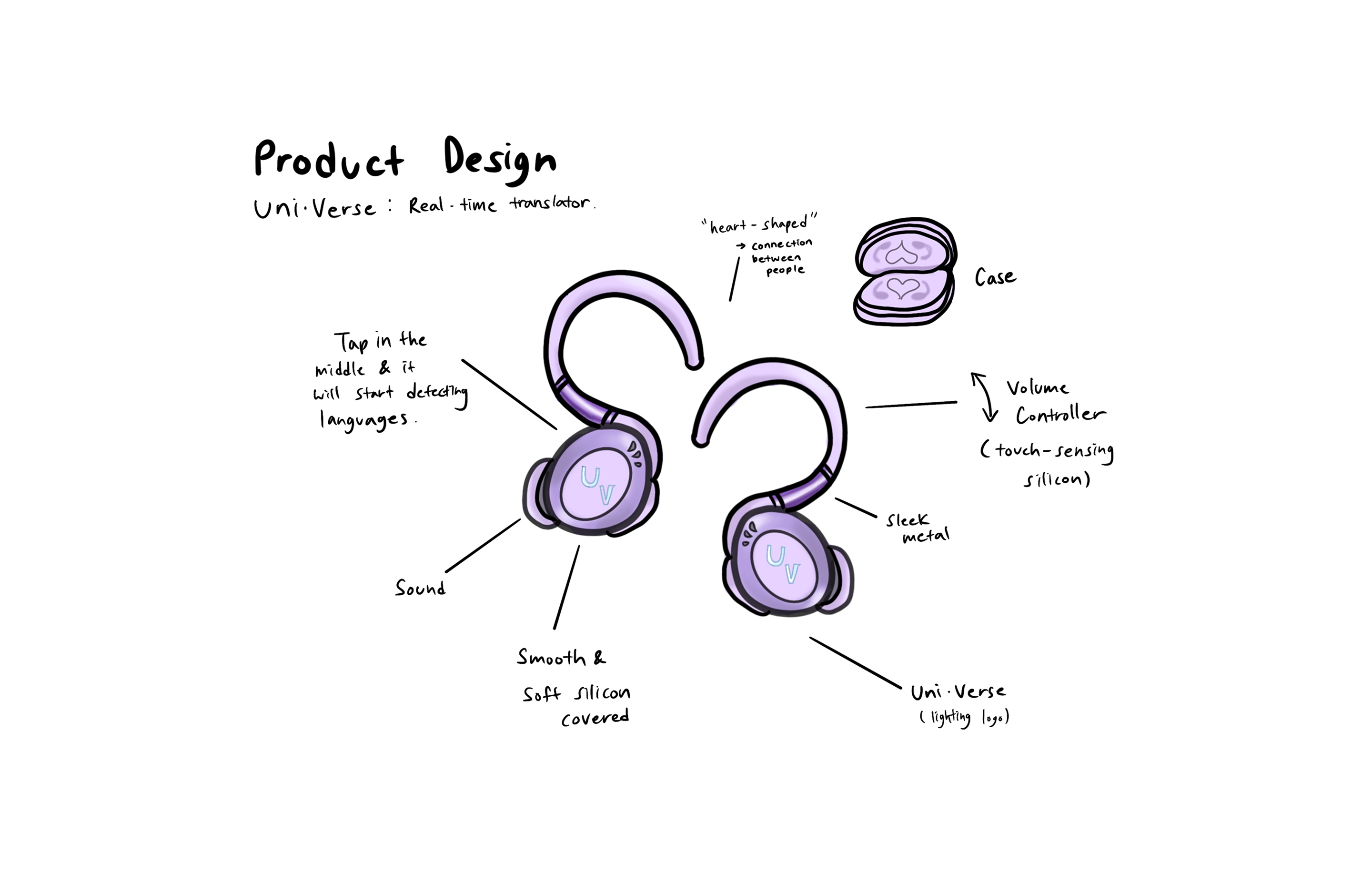
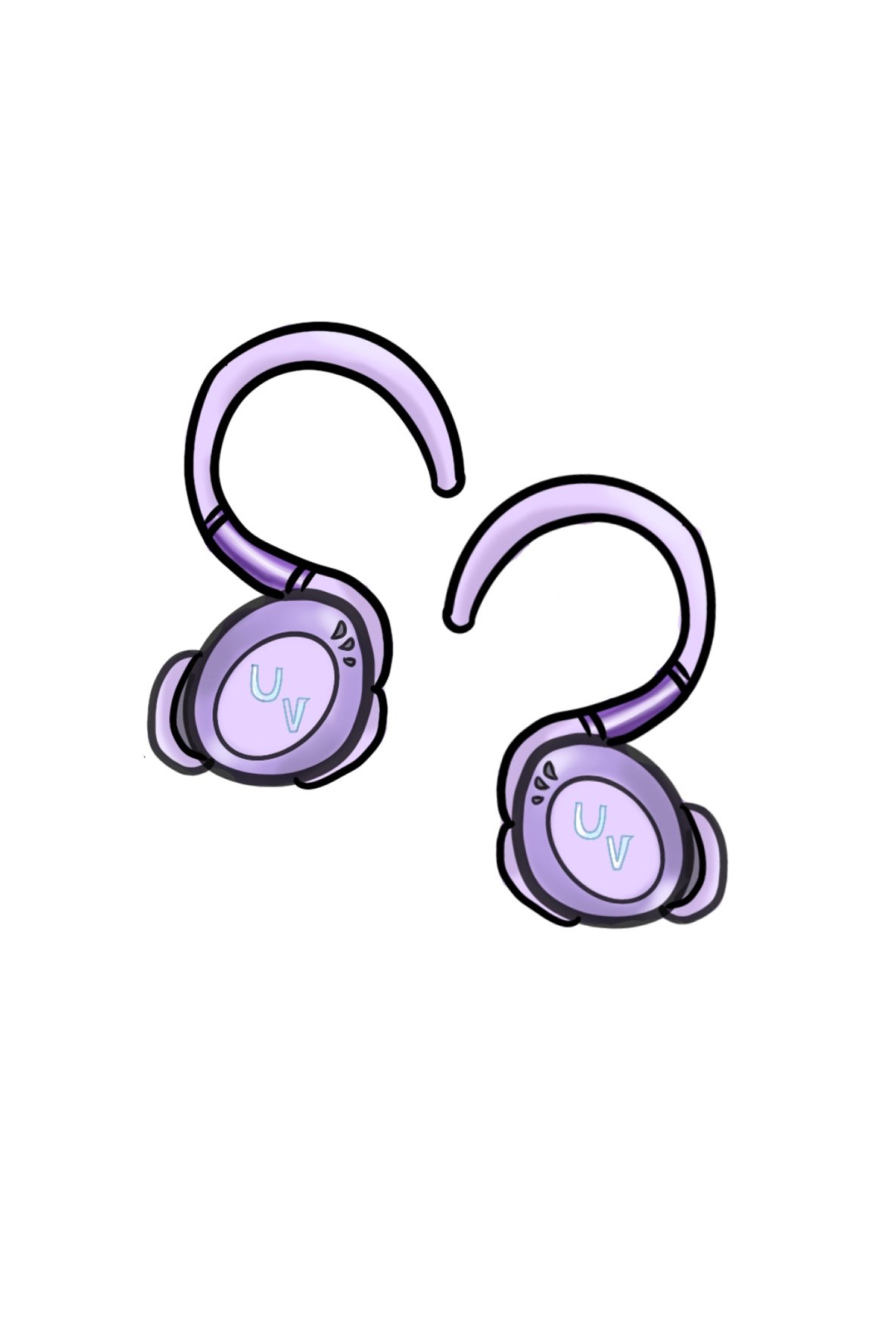
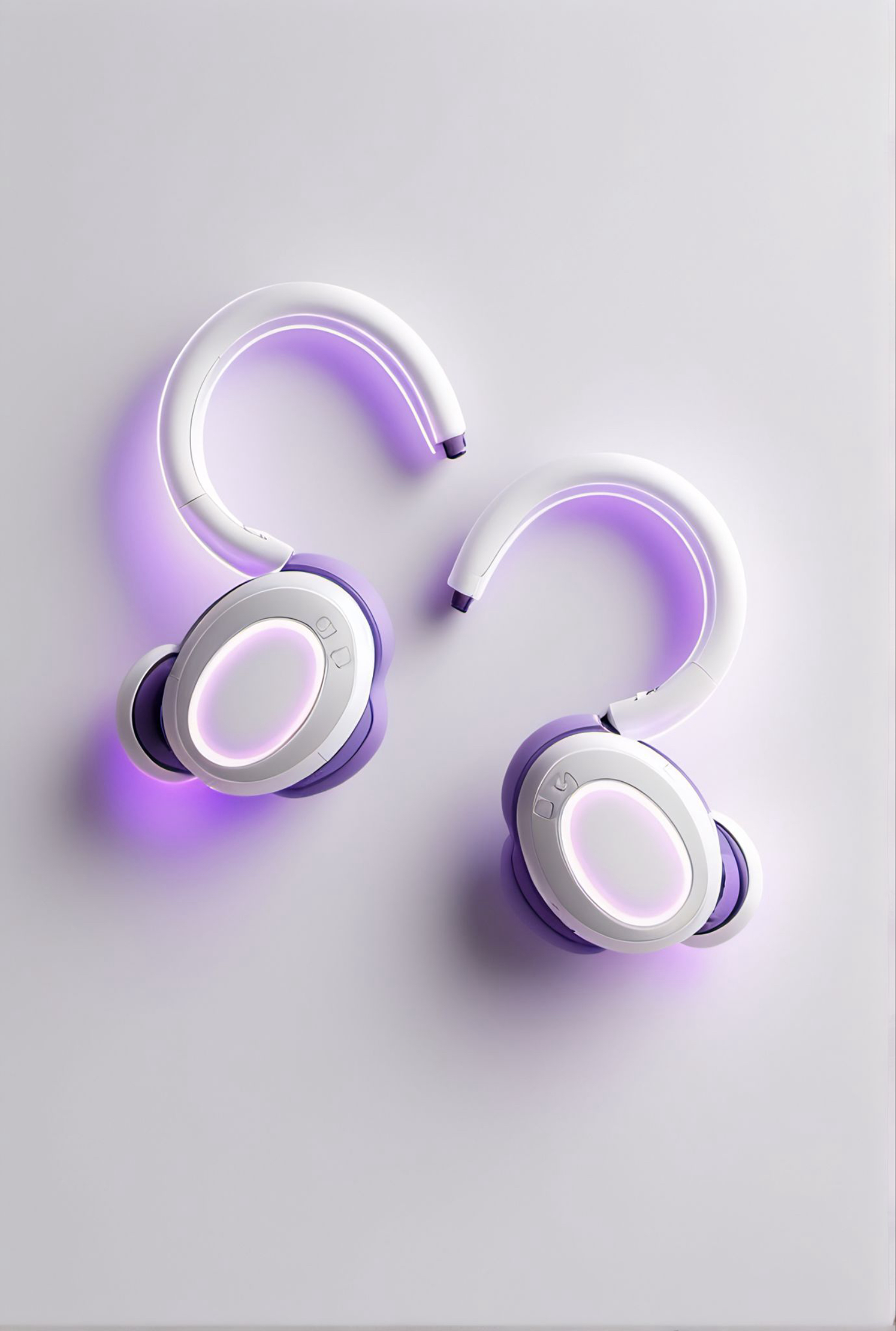
The product design process moved from annotated concept diagrams through to physical prototyping. The earpiece was designed to be compact and wearable — inspired by organic, rounded forms that feel comfortable and unobtrusive.
Key design considerations included how the earpiece fits the ear, how it signals active translation to the wearer, and how the physical form communicates its function without instruction. The final product uses a soft purple palette that reads as calm and intelligent rather than medical or industrial.
Storyboard
Telling the product's story
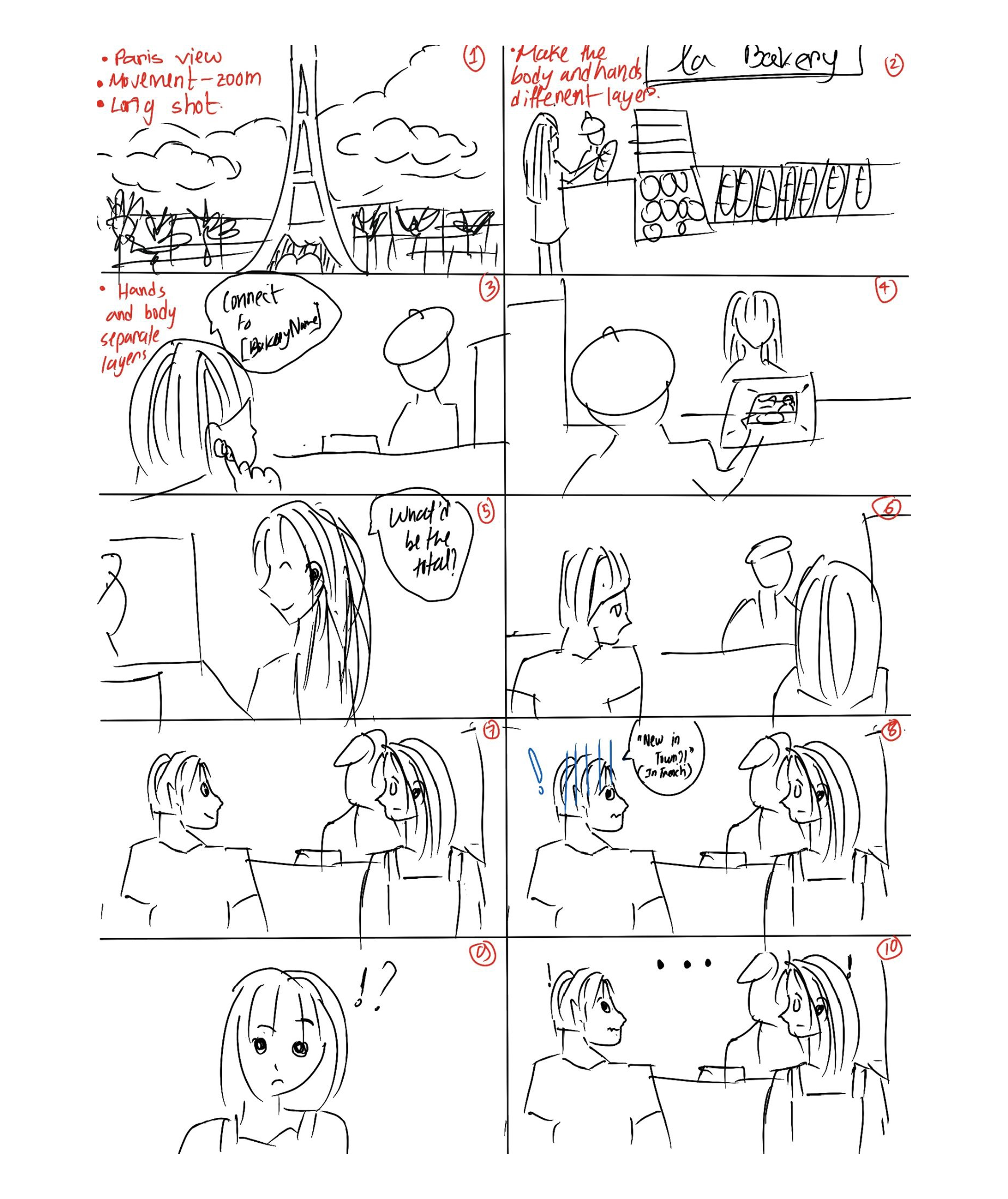
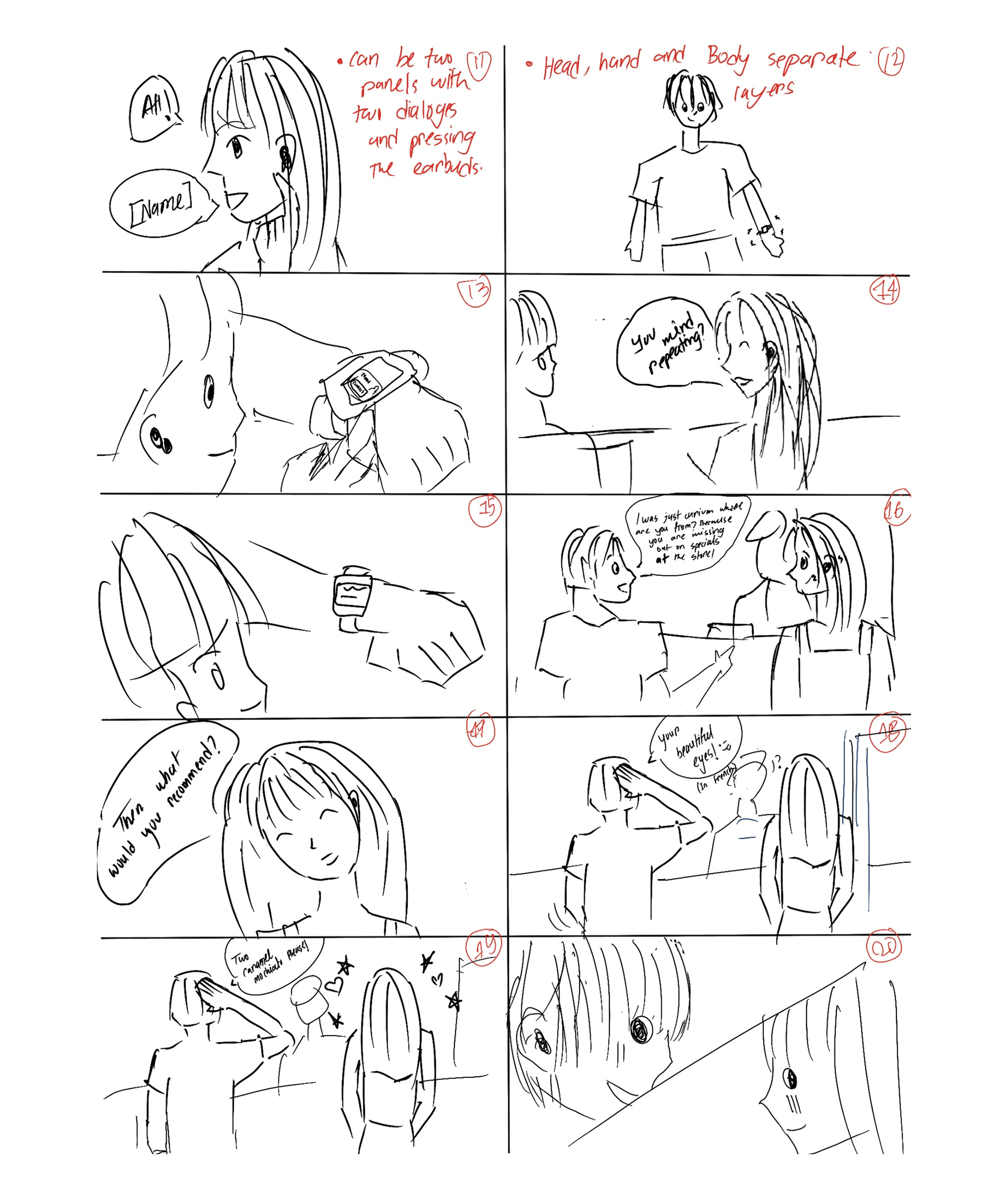
The storyboard maps out the narrative arc of Amalie and Malik's first interaction — from the moment of linguistic barrier, through the use of Uni.Verse, to a moment of genuine connection. Each panel was designed to communicate emotion and action clearly, serving both as a narrative document and a production guide for the animation.
Sketching, Refining & Contouring
From rough to refined
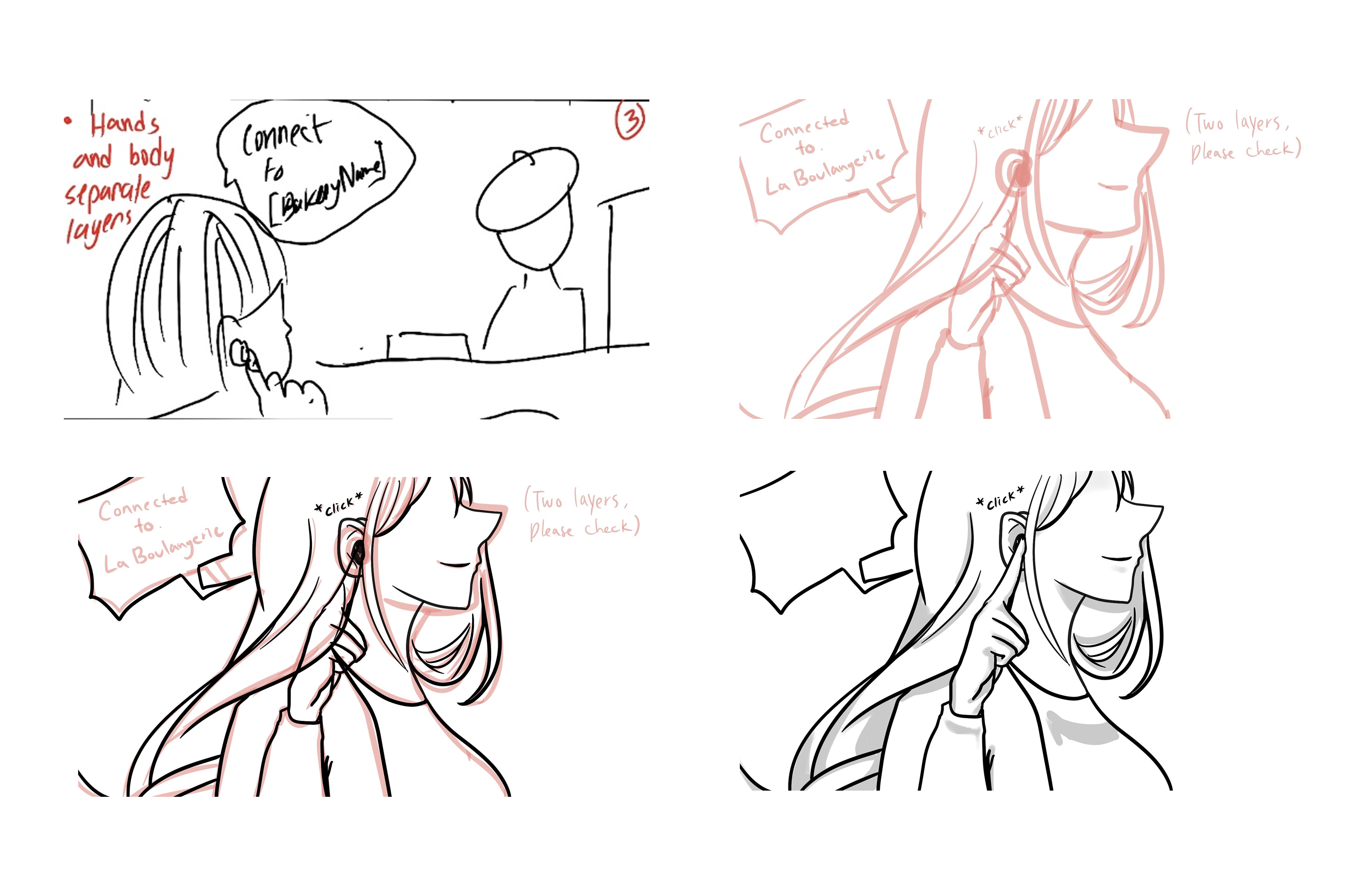
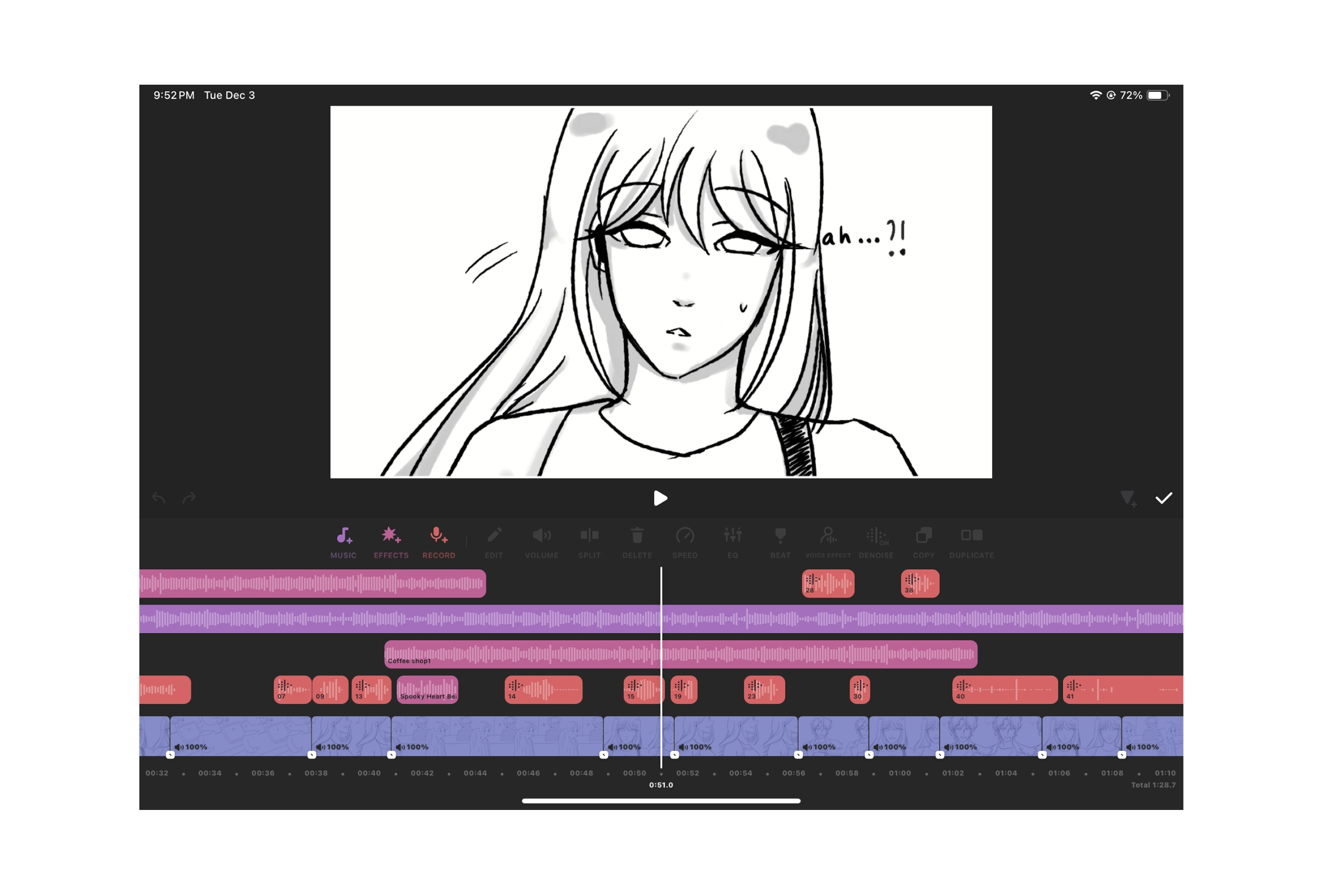
The animation production process began with rough sketches of each key frame, then moved through contouring and line refinement before colouring and compositing. Each stage of the process was iterative, loose gesture drawings gave way to tighter line work, which was then cleaned up and prepared for digital animation.
Animation & Final Video
Bringing Uni.Verse to life
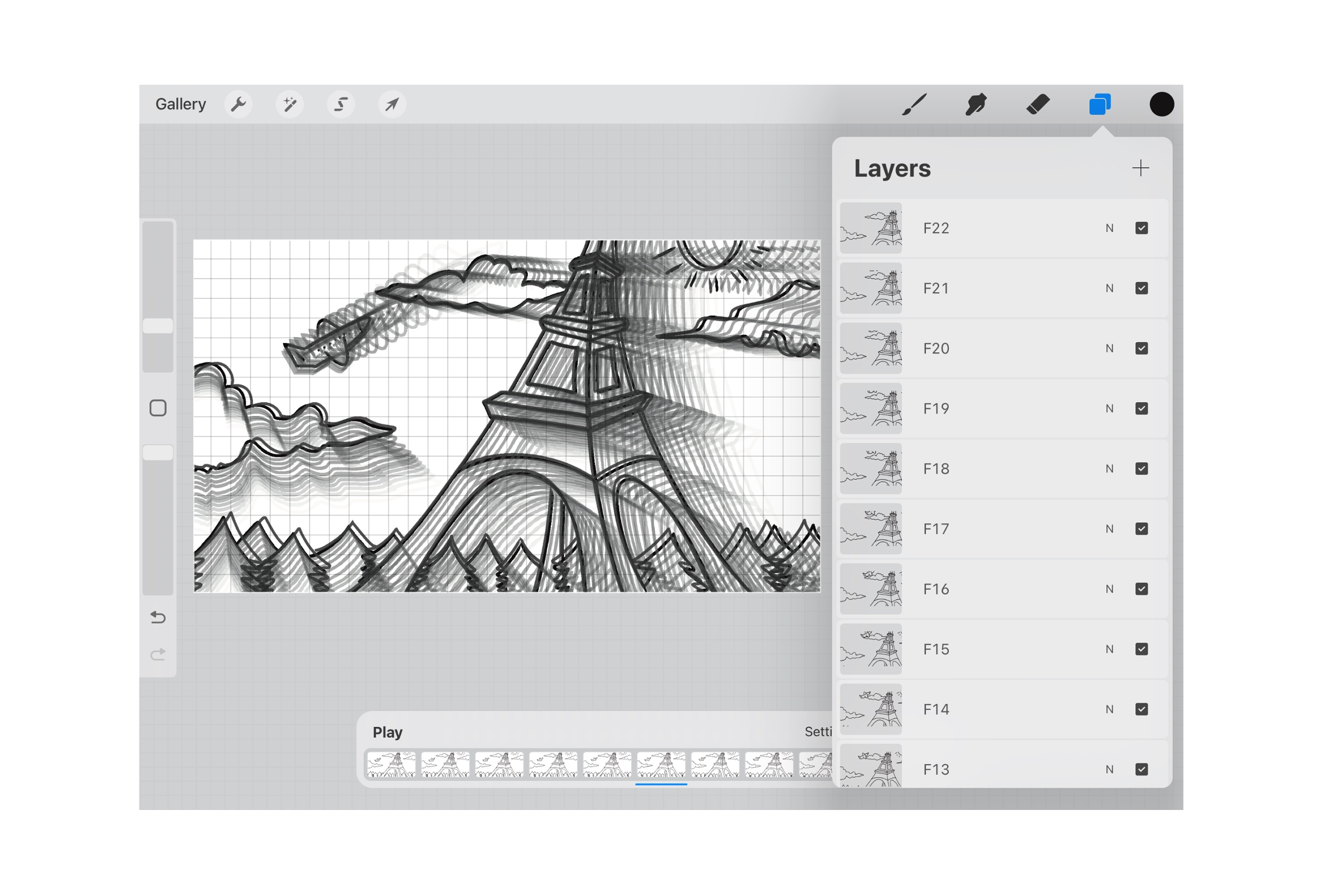
The final deliverable was an animated short that demonstrates Uni.Verse in use through Amalie and Malik's story. The animation brings together the character design, product visuals, and narrative storyboard into a complete product film — showing not just what Uni.Verse is, but how it feels to use it.
Reflection
What this project taught me
Uni.Verse pushed me into disciplines I don't usually work in — physical product design, character illustration, and animation production. Doing all three within a single project taught me how much the story of a product matters: the earpiece only makes sense in the context of Amalie and Malik's connection.
The most valuable part of the process was learning to move between abstract concept and physical form, translating an idea about human connection into something that could actually sit in someone's ear, then back again into a narrative that communicates its value in under two minutes.